

Beyond the launch email
We’ve all been there. A big change is coming at work, a clever and capable team has worked hard on it, even senior leaders have signed it off. The launch date is looming, and the comms plan is ready. There’s an email from a leader, a page on the intranet, a manager pack and maybe a webinar if there’s time.
Then launch day arrives. Everything goes out as planned, but someone disappointingly asks, “Why aren’t people using it?”
It’s a fair question. It’s just being asked too late.
An email can tell me that something has changed. It can point me to the right place. It may even make me curious (if it’s well written). But it can’t tell me what the change means for my working day, help me through my first attempt to do it the new way, or solve my problems when the new way feels harder than the old one.
I’m a marketer by background, so I tend to look at internal change through a slightly different lens. If people didn’t try something we had marketed to them, we’d look beyond the campaign. We need to take the time to understand motivations and pain points. Was the offer relevant? Was it easy to use? Did the experience live up to the promise?
Employees aren’t customers, of course. But they deserve at least that much thought. So before the next launch, I’d take the comms plan back a step and ask four questions about what people are being asked to do. They won’t answer everything, but they’ll show you where the real work needs to happen.
Name the behaviour
Name the behaviour
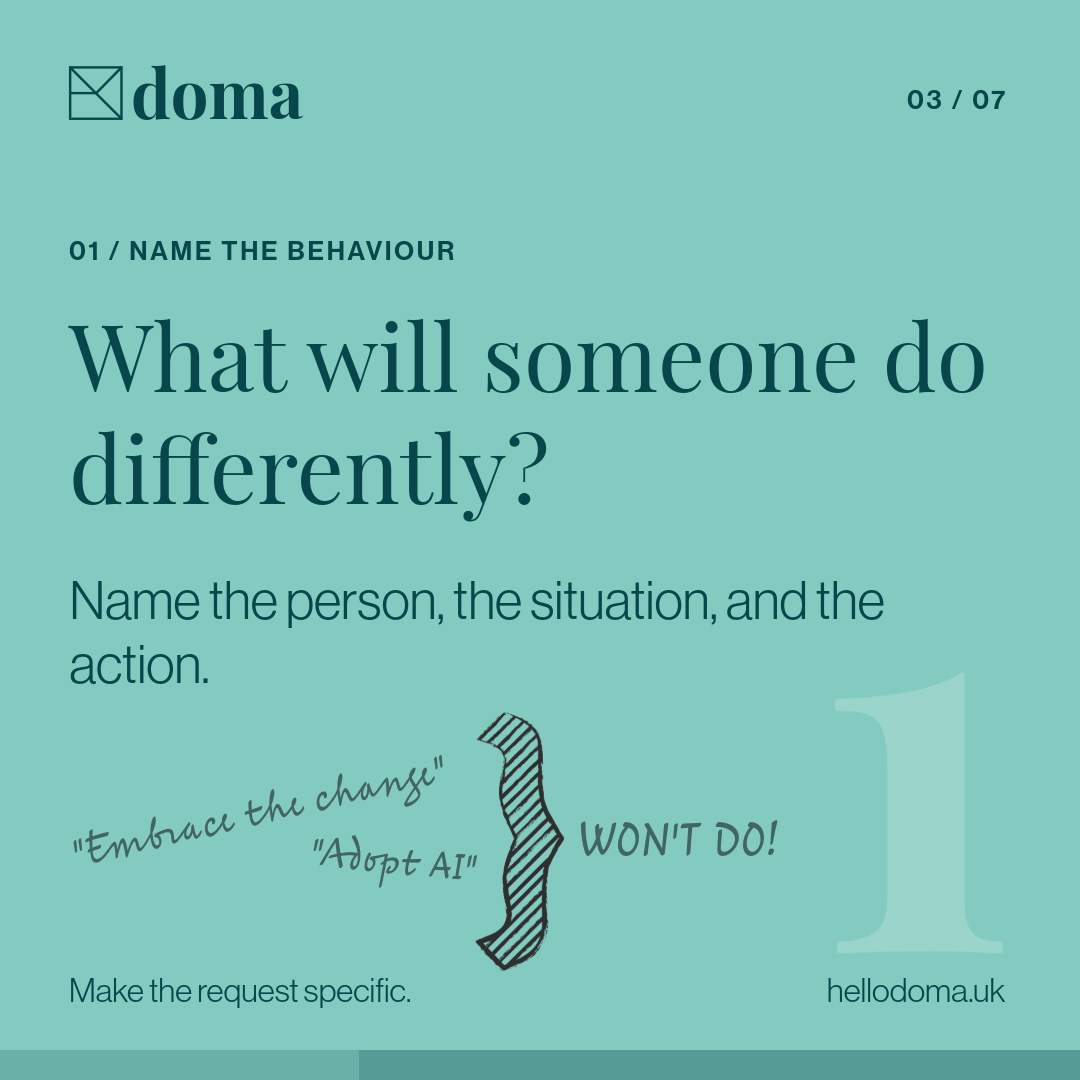
Finish this sentence: “Next week, [these people] will do [this specific thing] differently when [this situation happens].”
Vague descriptions like “embrace AI” doesn’t count. Be more specific. As an example: “When the team prepares a first draft of a customer briefing, they’ll use the approved AI tool to explore an outline, check the output, and record where it helped.” Now there’s something you can support, enable, observe and improve.
If you find it difficult to finish the sentence, pause. You might have an announcement ready, but you haven’t yet fully defined the change.
Find the friction
Find the friction
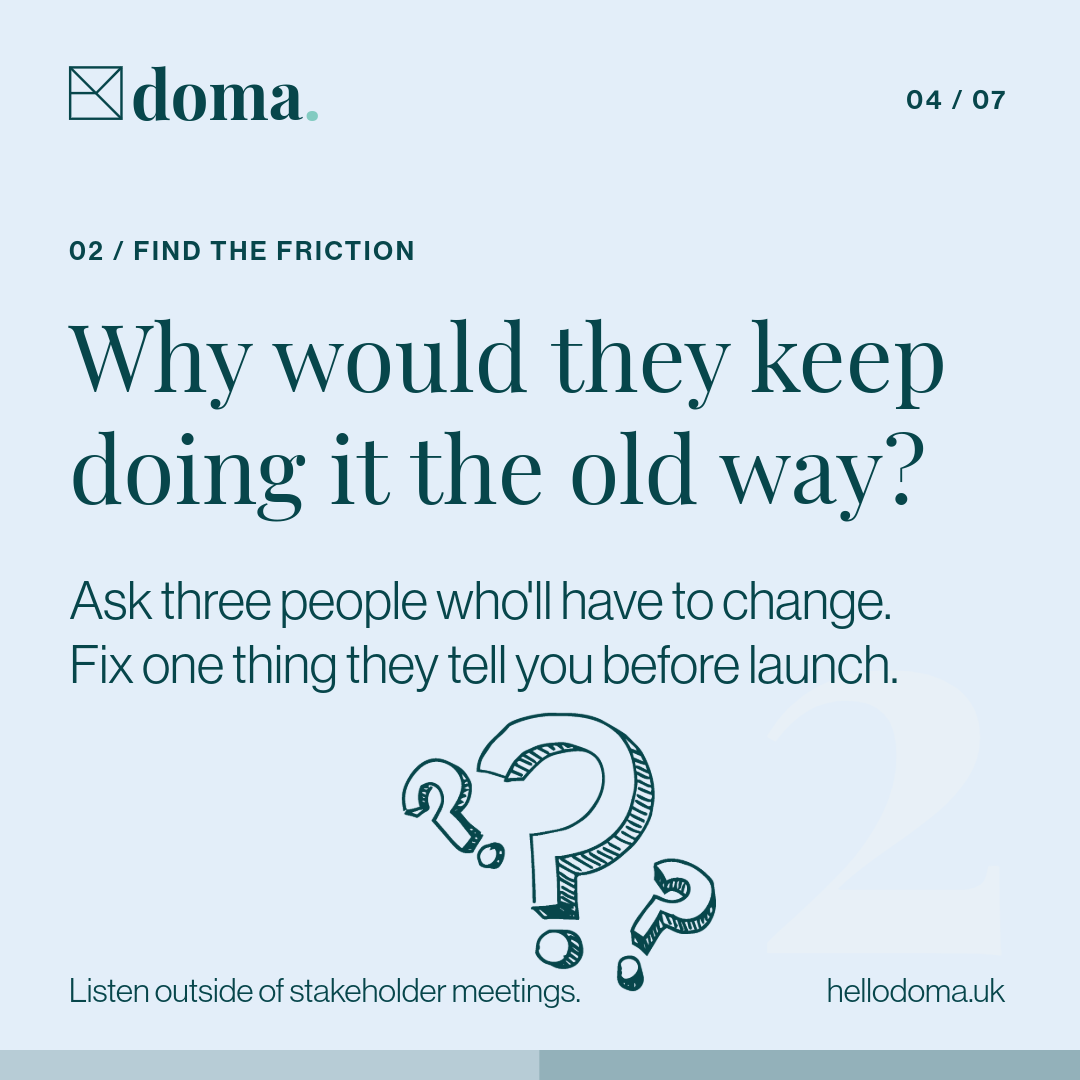
Ask three people who will have to do it to talk you through an ordinary working day. Show them the proposed new step. Then ask, “What would make you go back to the old way?”
If the answer is “because it’s easier”, keep asking what makes it easier. A missing permission? A confusing screen? Ten minutes they don’t have? A manager who still measures them against the old process? You’re unlikely to find these things in a comms approval meeting.
Take the answers seriously. Sometimes the best thing the communications team can do is tell the project team what needs fixing, and then tell people what has changed as a result.
Make the first attempt easy
Make the first attempt easy
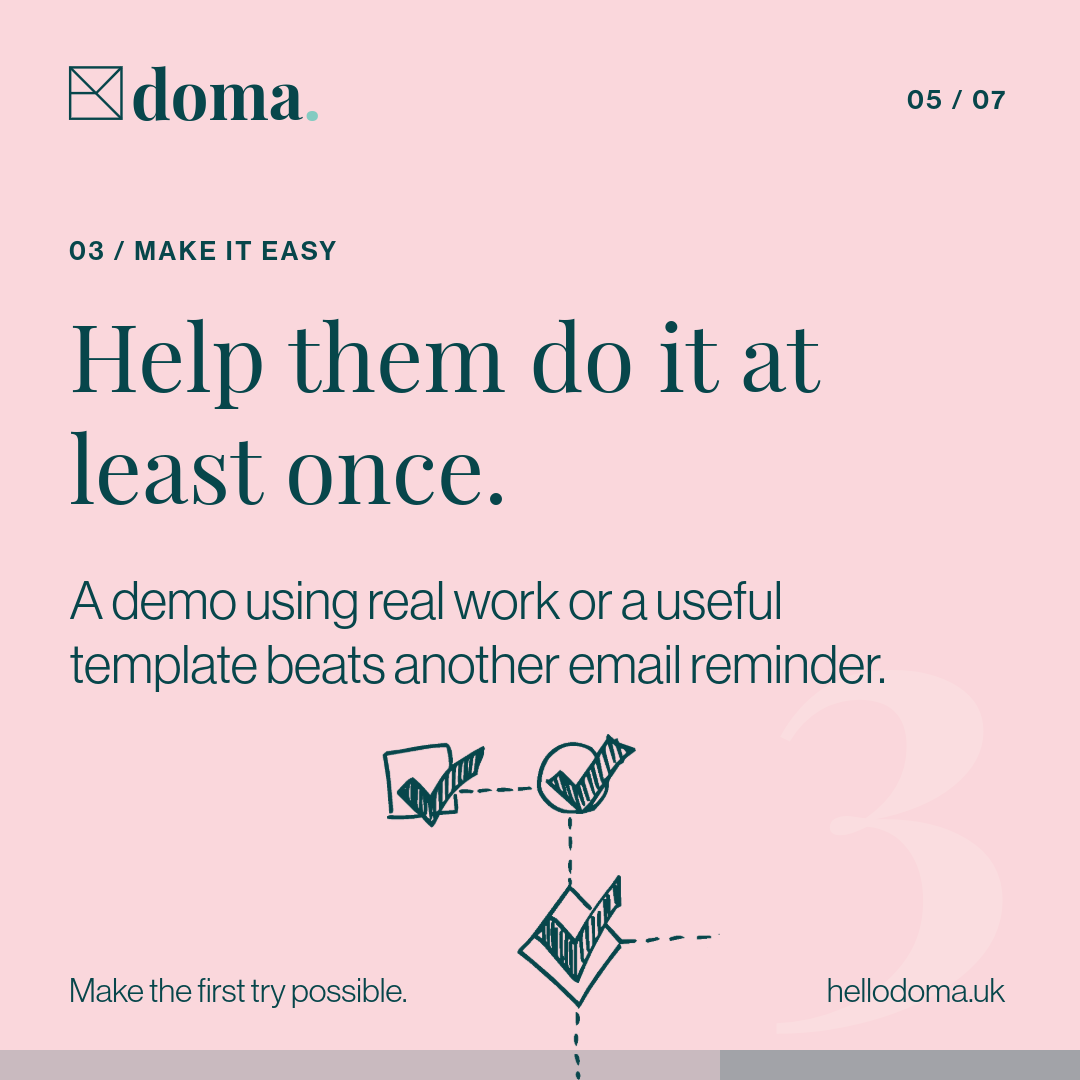
Help people try the new way on a real piece of work. A demonstration can be useful, especially when it looks like the work they actually do and leaves room for awkward questions. A tried and tested step-by-step template or time with a colleague who has already tried it might help more.
Give managers one question for their next team meeting: “What’s stopping us trying this on a real piece of work?” Then give them a way to act on the answer.
The aim is a first experience that feels possible, not a launch that looks impressive.
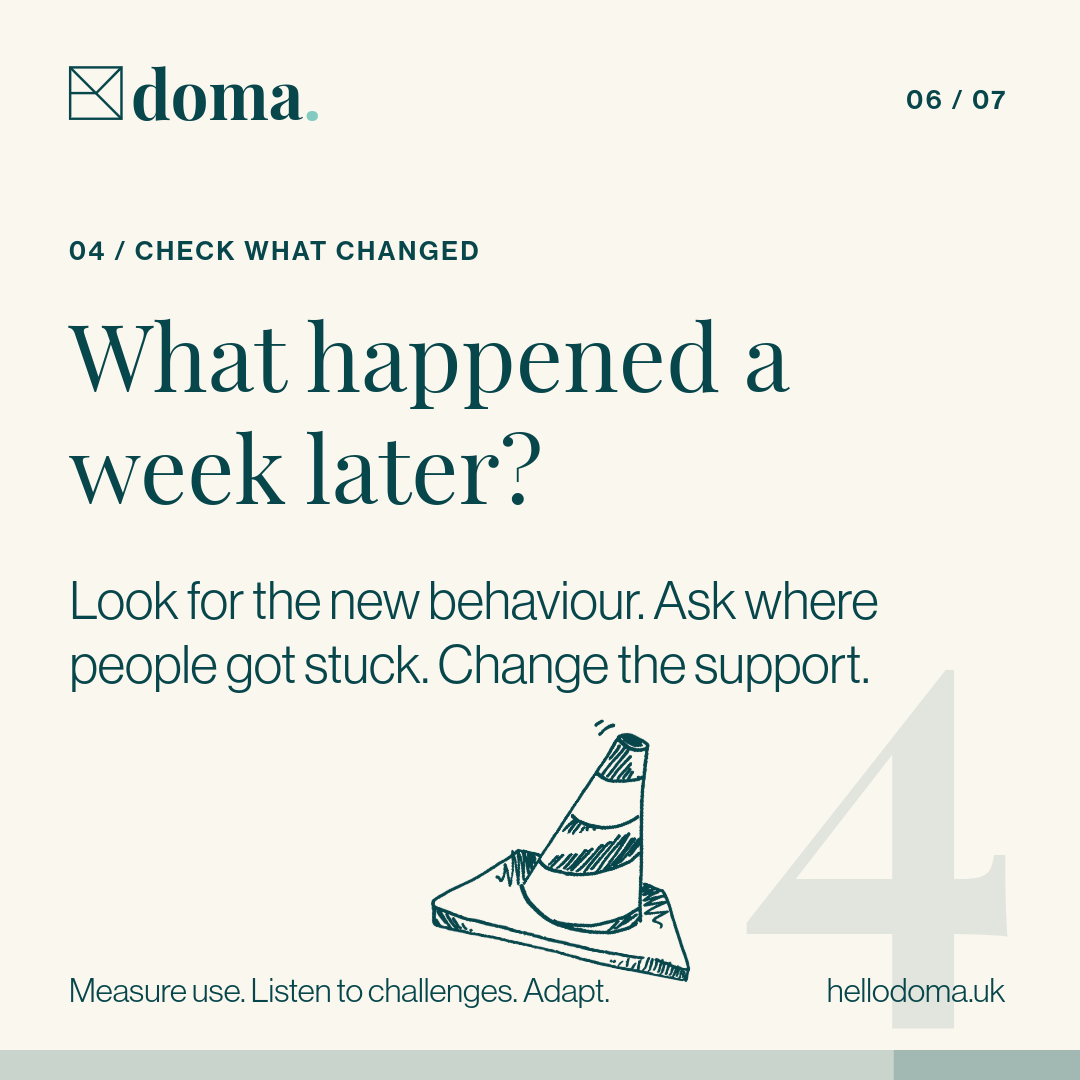
Check what changed
Check what changed
An email open rate tells you the message travelled, but it can’t tell you what people have done after reading it.
Look for evidence of the behaviour you named at the start. Talk to the people doing the work and ask what has helped, where they got stuck or what slowed them down, and if they’ve found a better way. Then check, check, and check again. You’ll get different results immediately after launch, and once they have had a fair chance to build the new habit. A first attempt and lasting adoption are different things.
Use what you hear to change the support, the process or the plan. People need to see that speaking up makes a difference.
Put it into practice
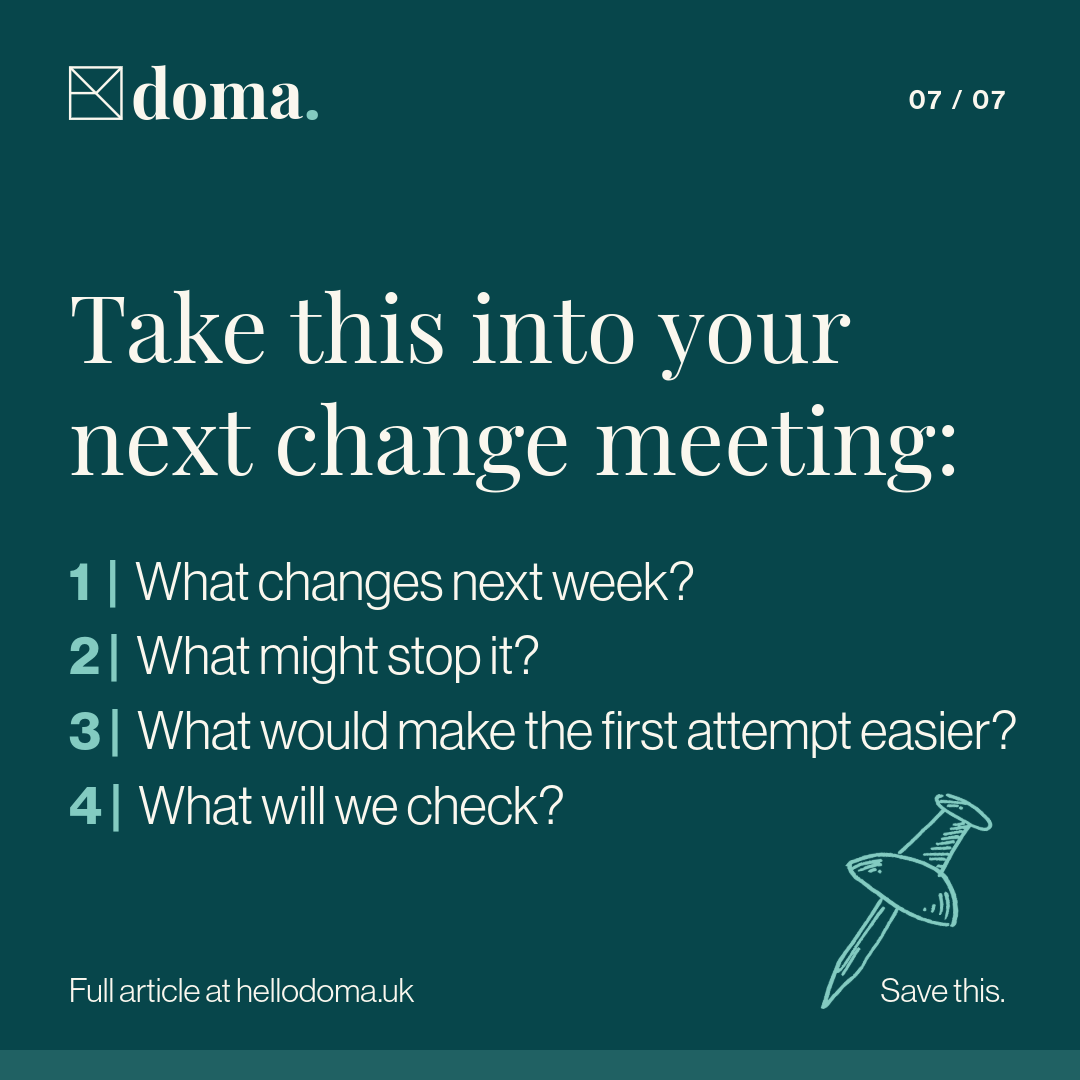
Four questions for your next launch meeting
01What should someone do differently next week?
Name one role or person, one situation and one action.
02What might stop them?
Ask three people who will actually do it.
03What would make the first attempt easier?
Fix one practical obstacle before launch and make the support feel relevant and personal.
04How will we know it happened?
Check the behaviour, listen and adjust the support.
You can take a first pass at these questions in twenty minutes. Then take your answers to the people affected and find out what you’ve missed.
But here’s the uncomfortable possibility: people might continue to use the old way because it still works better for them.
A marketing mindset makes us curious about that choice. What value can people see in the new way? What gets in the way? Does the experience deliver on the promise we made? If it doesn’t, a sharper subject line on an email won’t help. The organisation has to make the new way easier, clearer or more worthwhile.
Ask those questions while you can still change the process and the support around it. Then listen again once people have tried it. Because the real test arrives after the launch noise has died down. On an ordinary Tuesday, with a full inbox and a job to get done, which way will people choose?
So, send the email. Just don’t confuse sending it with actually making change happen.
Take it into your meeting
Before you send the email.
Four questions to answer before your next change meeting. Download the printable one-page worksheet and take twenty minutes to get started.
Planning a change that needs to land beyond the launch email? I’d love to talk